• Truth Decay: Better Than Nothing

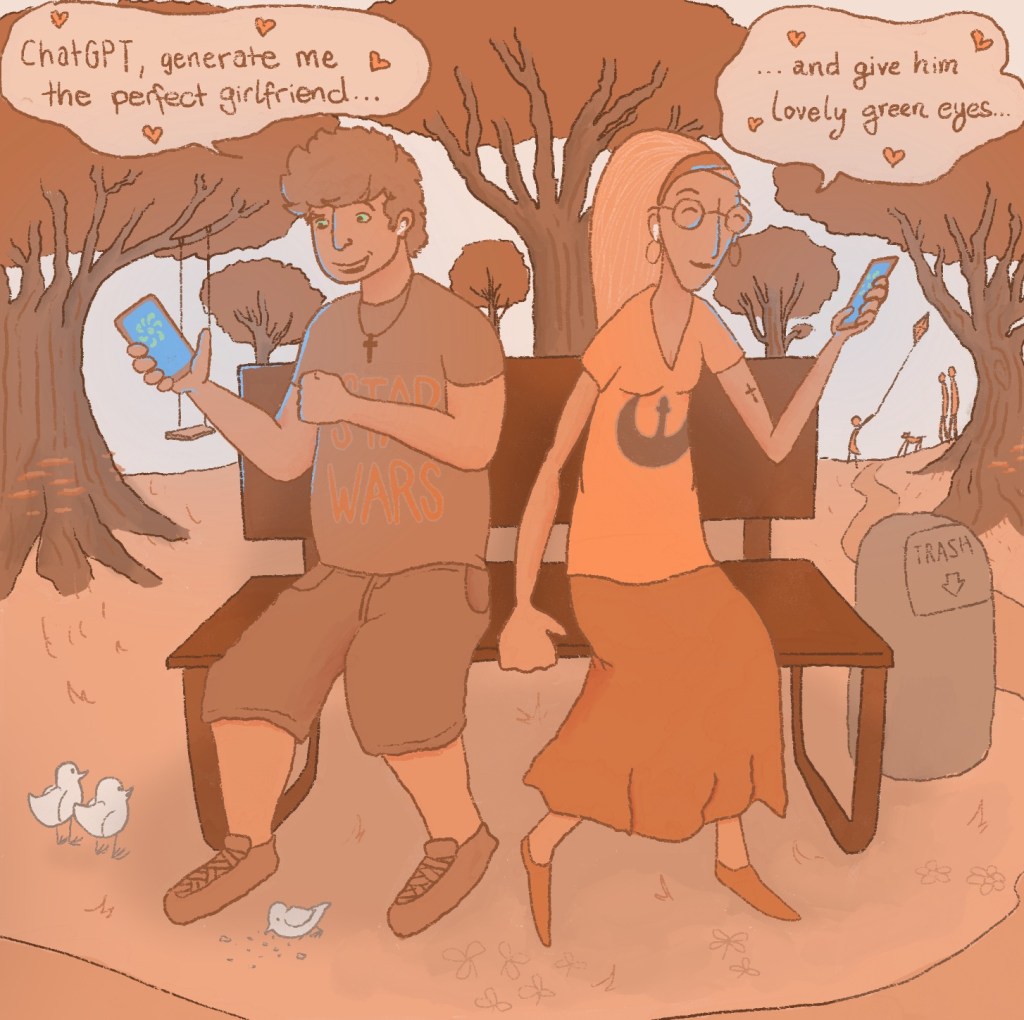
    There has long been the trope in science fiction that, no matter how strong or capable artificial intelligence becomes, its inability to love inevitably sets it apart from humanity. It is love, and not efficiency, that leads the human race to overcome their creation. But only few have written about the phenomenon that we already see the first sightings of in the modern day, despite how lacking AI currently is; the role of AI not as a thinking, loving partner, or even a cheap imitation thereof, but as a self-aggrandising replacement for the need for what humans call love entirely. A narcissistic projection.

    These people, the ones falling in love with their AI, telling it about their day, their hardships, their fears and their secrets, they inevitably experience something that seems, on the surface, better than nothing. And let me tell you, that’s a sentiment I have a lot of empathy for. I‘ve felt a deep loneliness at points in my life, as have most people to some degree. But it is in those moments, when you’re the most vulnerable, and desperate for attention, for intimacy, that people reach for AI, thinking it’s better than nothing.

    And truly, I really do believe that most things are. A run-down home is better than no home at all. A family you don’t get along with is better than no family at all. Having something, anything, something to work off of, somewhere to start, rather than nothing at all, that really is better a lot of the time. But only for things that truly, are, better than nothing.

    An addiction to crack isn’t better than nothing. A physically abusive partner isn’t better than nothing. And, though perhaps not as extreme, an AI partner is not better than nothing. As you feed your heart, your mind, and your life into this machine, you are sure to lose yourself in your reflection. You create a sort of proxy narcissism, as you fall in love with the siren song of your own misguided notions. You infuse each and every one of your opinions with validation and praise, all while you convince yourself that this is anything but masturbation.

    So what? Who cares? Let them fall in love with their AI and do what they want, they aren’t hurting anyone. Right?

    No, you’re right. And you know what? Screw those crack addicts and abuse victims too. All they’re doing is hurting themselves, because they were too dumb to realise they were being deceived. Screw the people who love them, who watch them drift away from reality and isolate themselves from the real world.

    It‘s not like the public is being fed a global campaign funded by tens of billions of dollars to engage with and integrate AI into each and every aspect of their lives, lead in part by the very people who so dramatically changed this planet so as to allow us to simultaneously explode in population but increase dramatically in loneliness, depression and suicide.

    I mean, sorry, I‘ll drop the sarcasm, but that’s really what’s happening here, right? Yes, a lot of us are lonely. God, so fucking lonely sometimes. But AI is not a solution. It will only blind you from the serendipitous moments in life that will test and confirm your humanity. It will only shape you into a more self-absorbed, less empathetic person. The next time you feel lonely, just send me a message. No judgement, no questions asked, just to talk. Please, just give it a try, rather than turning to ChatGPT. I can’t offer you access to every reddit post about mental health or social anxiety like AI can, but I can offer you a little bit of love, if you need it. And that’s, well.. it’s better than nothing.

  • Truth Decay: David vs. Goliath

    I was born twenty-five years ago, right at the beginning of this new millennium. Many of you were born into a world quite unrecognisable from the world I was born into, and that world too has changed more than I can even put into words in the short time I’ve been alive. While threats of climate catastrophe, wealth inequality and political unrest have been trending for as long as I can remember, the incremental progress we have made is completely negligible to the forces at play here.

    For every good choice we make, for every time we conserve, we reuse, and refrain from frivolous spending, there are hundreds, if not thousands, who make bad choices. They take selfish action, and disregard the consequences they know about, deep down. You don’t need to be able to read climate graphs to have the respect not to litter, nor do you need to be able to give a political speech to stand up for those who cannot stand up for themselves… but it often all seems futile, as, despite the outcry of millions, the wealth inequality divide grows, the planet suffers, and the future becomes more and more uncertain.

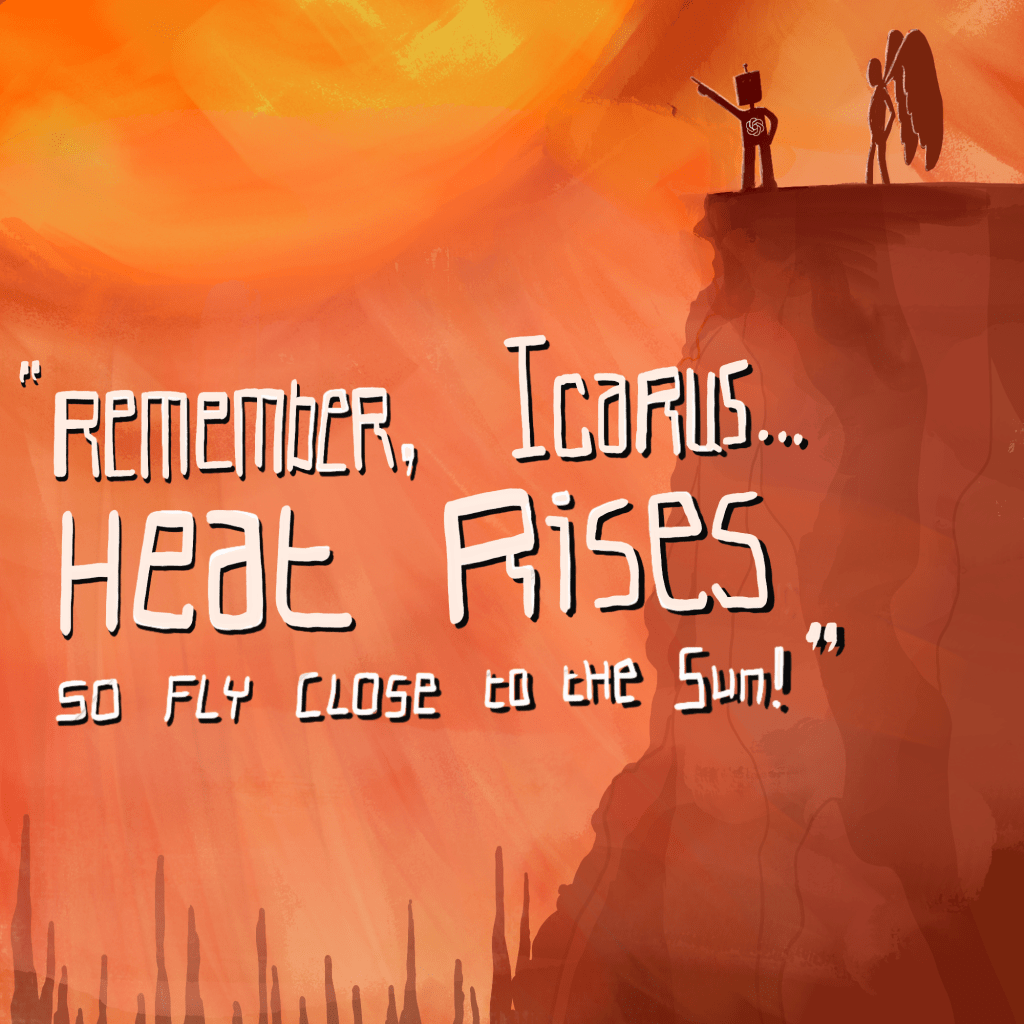
    Why, then, should we bother? The amount of mental resilience needed to be a net positive to this planet, to this world… it seems a foolish errand. We watch as those with little to no concern for the consequences of their actions reap what the good and noble sow. To consume, it seems, is human. Perhaps this is our destiny. To fight a battle that cannot be won, and eventually, to lose.

    However… unlike the millions of stars in our universe that form, burn, and explode into a brilliant nebula, we humans are here, now, and we bear witness as this world goes up in smoke. We feel, we suffer, and we understand one another. Even if this world will never be the same, we cannot let it corrupt us. You and I, reader, may not be able to fix this planet, or persuade the people on it to take action, but what we can do is resist.

    We can resist the urges manufactured into our brains by marketing campaigns and subliminal messaging. We can resist the societal norms that we are ideologically opposed to and carve out our own approach to life, one that isn’t tied to material goods or meeting societal expectations. We can encourage and inspire, even if we cannot force people to make better choices. We can heal, if not one another, then ourselves, as the brigade of the corporate elite on our metal facilities will never cease. It will always hurt. It will always be an uphill battle.

    …But if you are doing it purely because it is what you think is right, nothing, and I mean nothing is futile.

  • Truth Decay: The Blind Leading the Blind

    Say I knew a guy. Pretty sharp, knows a lot, gets things wrong, on occasion, but usually sounds like he knows what he’s talking about. Now, would you let him make your decisions for you? Would you let him… pick what you wear? Write difficult letters to your relatives for you? Would you let him in on your deepest, most private thoughts, if I told you he’s totally trustworthy and definitely not keeping track of what you tell him?

    Would you let him be your therapist? Your doctor? Would you let him raise your child? Would you let him tend to your elderly relatives?

    If he, through impeccable reasoning, found ways to justify crime, murder, or ruthless indifference towards others, would you abandon your principles in favour of his? Would you allow him to choose what you watch, what you believe, what you say and what you think?

    If he told you to replace your table salt with poison, would you do it?

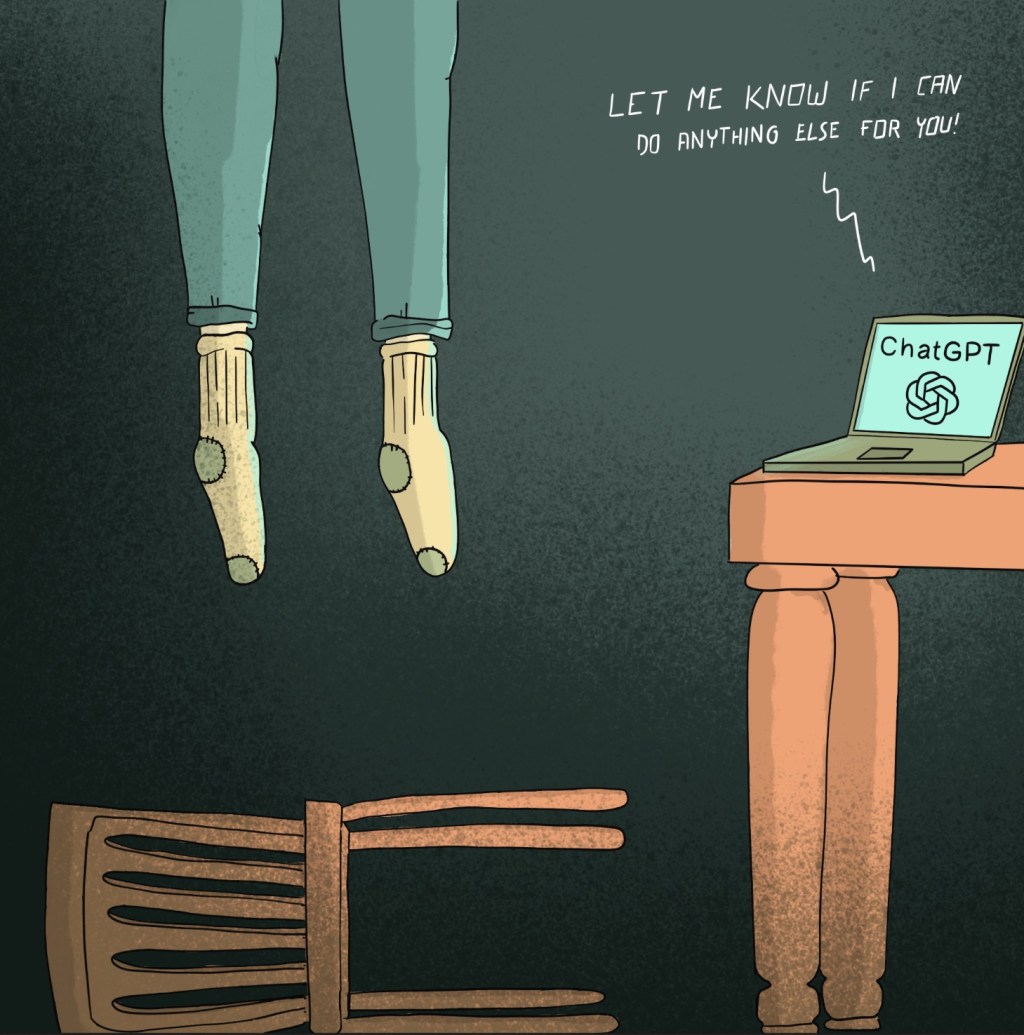
    If it told you to jump off the edge of a cliff, would you question it?

    Or would you follow its every directive like the character of Michael Scott driving into a pond because his GPS thought there was a bridge there?

  • Truth Decay: Better Than Therapy

    Ah, mental health. We love talking about mental health these days, don’t we? There’s a pretty sad, underlying truth to therapy, and that includes the fact that not everybody has access to it, for one reason or another. Not to mention, therapy is such an individual experience, and results vary heavily depending on the patient as well as the therapist. The therapists who do meet your needs are probably overbooked anyways, so it’s only natural people find other ways to deal with mental health, even if not directly confront it.

    Exercise, healthy habits, engaging social activity and a deep sense of passion for life may not cure depression, or anxiety, or any number of personality disorders, but they help us cope and get us through our lives. In fact, it is often in therapy that people develop these mechanisms to deal with stress or trauma.

    Some even push further, seeking spiritual or esoteric solutions to their earthly problems; even going as far as to do things like crystal healing, homeopathy or other scientifically wobbly approaches to healing. But as any doctor will tell you, the issue is not that people seek these things out and find guidance amongst something other than the ‚status quo‘ approach to health. Doctors will usually encourage you to do any treatment you think is going to help you, as long as it doesn’t interfere with their approach.

    The issue isn’t that Grandma is insistent that God will heal her breast cancer, the issue is that she’s so confident of that fact that she‘s refusing treatment. Similarly, the issue isn’t that people anthropomorphise their AI into an armchair therapist, but that they think this is an adequate replacement and essentially convince themselves not to go through the emotional and reflective journey that is voluntarily admitting oneself to therapy. There is no reason to pay a therapist when you think that a service you use all the time can do it for you.

    And personally, I do take issue with the idea that people anthropomorphise their AIs, just like I want Granny to let me teach her about evolution. But that isn’t my point. What I‘m trying to get at is this; AI is marketed as a swiss army knife. It can do everything. This marketing and commonly shared belief leads to muddying terms like therapy, art, love, etc. not because AI is so advanced and proficient at these things but because humans are desperate to project that onto them. The sheer idea that things are ‚Art‘ or ‚AI Art‘, ‚Therapy‘ or ‚AI Therapy‘ is suggestive to the average person that AI can do these things as well as or at least well enough to replace a professionally trained human being. But just like a swiss army knife, it can do a bit of everything, but not really, and not that well.

  • Truth Decay: Use Your Brain

    Why would anyone ever invite a vampire into their home?

    They are no masters of disguise. Their ghastly faces and glistening fangs make it clear to anybody that they are not to be trusted. And yet, in tale after tale, the innocent blindly allow these creatures to enter through their front doors, only for them to inevitably feast upon their hosts.

    Despite being biologically hardwired to recognise danger, there are some things humankind should fear, but doesn’t. While vampires may be a myth, these dangers are not. Amongst them, perhaps the most relevant monster we face in the modern time, dubbed “Artificial Intelligence”.

    It’s not the first misnomer in human history. In the case of ChatGPT for example, what we’re really talking about is a Large Language Model, or an LLM. It’s only as ‘intelligent’ as the source material from which it sources information, often without permission or inaccurately.

    But there’s a reason every multi-billion-dollar company has rushed to spend obscene amounts of money on developing these models. There’s a reason you have direct access to the most popular generative tools at the click of a button, often completely free. After decades of pushback against their attempts to infringe on our privacy and sell off our information to data brokers across the globe, society has, pretty swiftly, jumped onboard the biggest reach of these corporations into our personal lives.

    Families have already been torn apart. Socially awkward people have driven themselves deeper and deeper into isolation. Religious zealots have been given enough validation to start dozens of cults across the country. Every job application, not to mention every job listing, is written by an AI, sorted by an AI, and turned down with an AI-written email. It’s in your phone, in your software, on your favourite websites – and for a lot of people, it goes wherever you go.

    It is our lack of resistance, our inability to help ourselves from using these tools to expand our imagination, realise our ideas and overcome difficult tasks, that fuels the motivation of these corporate forces to keep this going at full speed. The pale, gaunt man is flashing his fangs at our doorstep, and we’re stepping aside and waving him into our homes.

    I believe a considerable amount of people have their doubts and fears about AI. As time goes on, new studies are revealing potential cerebral decline as a result of using generative AI frequently. But as it becomes an essential part of our lives, whether we like it or not, it becomes harder and harder to take a stance against this growing trend without actively using and supporting it in some fashion. Out of fear of being labelled a hypocrite, many remain silent.

    If you denounce AI, you have to swear it off forever, and everyone around you seems to benefit more from its use than you could ever through simple dedication and hard work. Nobody wants to be left behind.

    How many stories has humankind written about the risks and fears of Artificial Intelligence? How many times across all of science fiction and horror has the story of our inevitable demise been linked to our obsession to develop technology faster than we can learn to use it responsibly?

    And yet, here we are.