
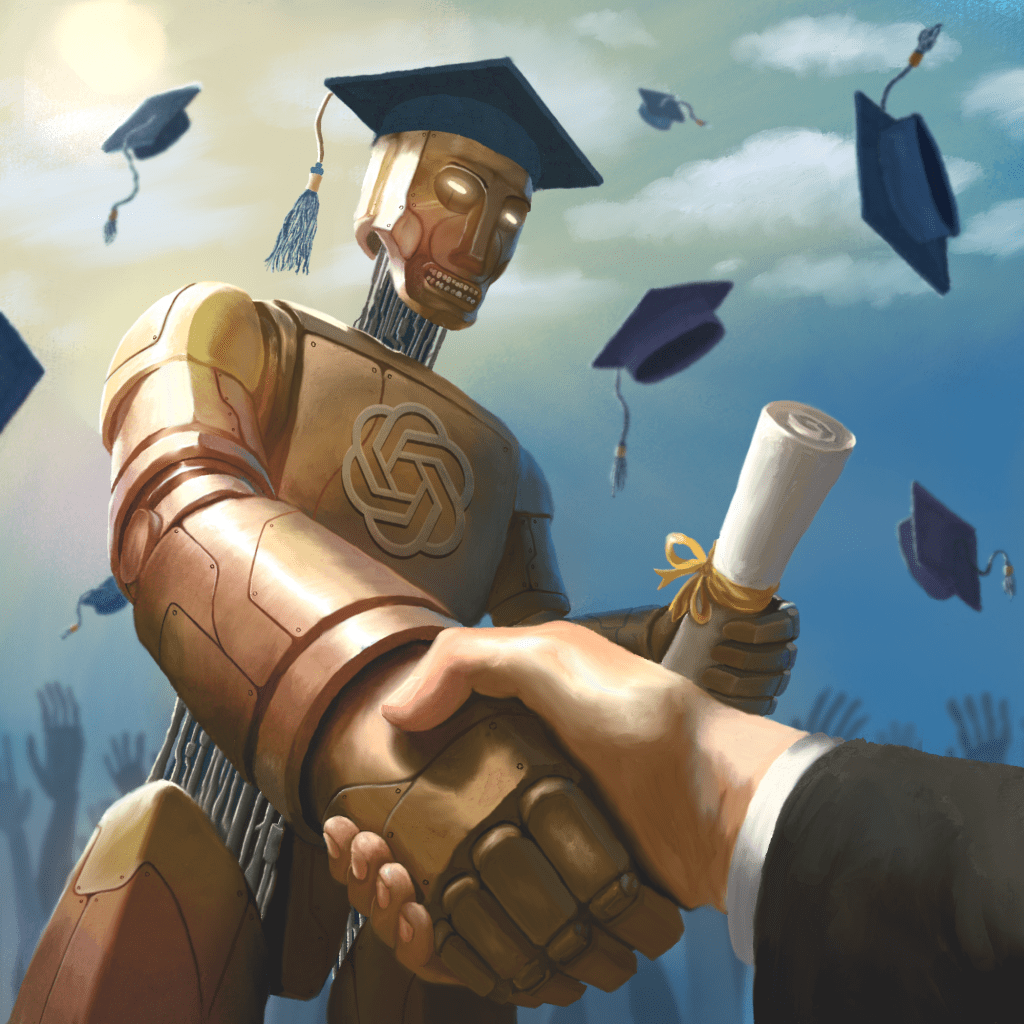
Studies have shown that, given the opportunity, most students in academia are willing to cheat. In a series of surveys conducted over decades by Donald McCabe, 60% of students admitted to cheating in one form or another. Due to the nature of the questions in the survey, it’s fair to assume the real number is even greater. Another study from 2022 found that students were far more likely to cheat if they thought their classmates were cheating. Individual students may be unlikely to cheat on their own, but many wouldn’t turn down another student offering them a glimpse at the answer sheet. When it comes to following the rules, social pressure plays a major role in keeping us in line.
This pressure isn’t limited to cheat sheets. Because generative AI is so easily accessible and integrated into so many aspects of people’s lives, there is enormous pressure amongst students to use generative AI more and more, risking dependency especially because of the cumulative nature of higher education. There’s also an unspoken agreement between students that, while potentially unethical, using generative AI to complete assignments is not exactly cheating. This is no accident.
Just take a look at the advertising behind companies like OpenAI directed at students. They fall just short of explicitly encouraging the use of generative AI to cheat the system and get ahead, but people are smart, they’ll use generative AI to do whatever they can think of, not just what an ad tells them to. The companies advertising these services to students are wholly aware of this; they just need to plant the seed in students’ minds that difficult assignments can be overcome with generative AI. The students will then seek out the technology on their own when they’re next faced with a challenging task.
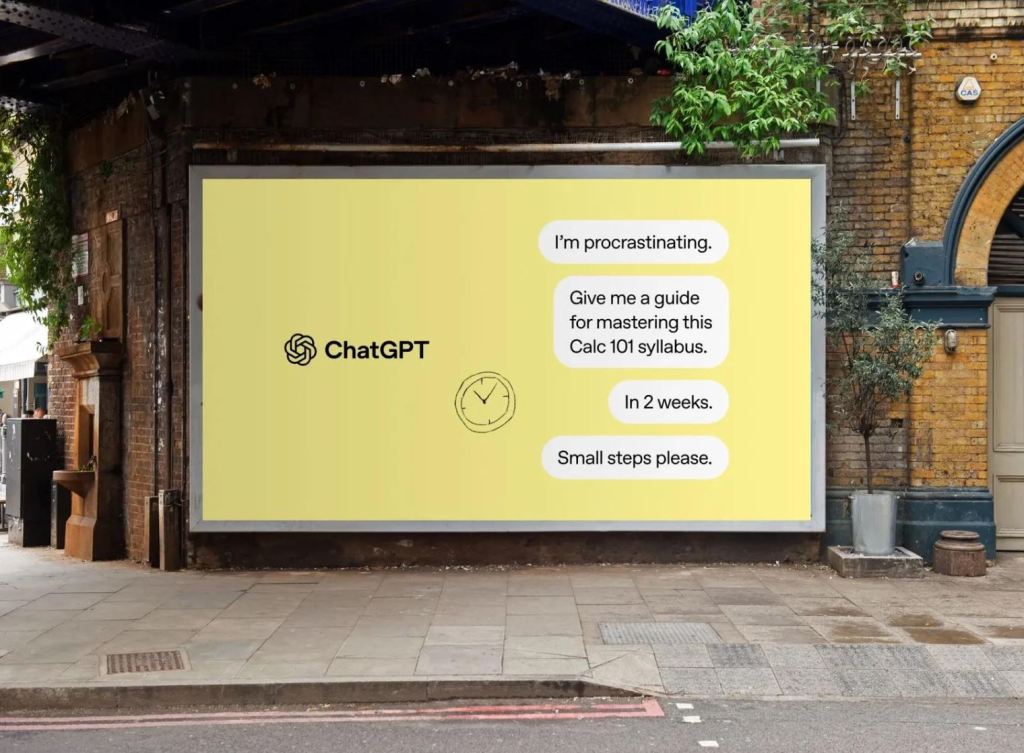
However, the real point of peddling a ChatGPT, Claude or Perplexity subscription to students is not just to sell to them, but to normalise the use of generative AI in education as much as possible. This technology has yet to be profitable, and AI moguls are desperate to solidify generative AI into the zeitgeist so that it cannot be discarded or ignored as easily. The plan is to turn everyone into a hypocrite, so then, just as with the tobacco, meat, and dairy industries, people will hesitate to change their minds and even then struggle to change their behaviour.
By pushing students to rely on AI, these companies are creating long-term customers that they hope act as living, breathing billboards. Every assignment you complete starts to feel more and more like a joke when students all around you are automating their work and getting better grades than you. In fact, rather than a shameful secret, some students who graduate using generative AI to carry them through their education treat their ill-gotten degrees as tokens of pride.
It may very well be that generative AI has its uses in education, for both students and teachers, but so far, this campaign of putting all sorts of different things under one umbrella of “AI” has been a double-edged sword. As more and more of the “dark” side of AI comes to light, be it how the chatbots are trained or the enormous amount of resources they demand, it seems that more and more students are turning away from generative AI, not necessarily because they don’t see its merit, but because they dislike or fear the way this technology is changing the world at such a rapid pace. A lot of the justification behind the investment and unethical development process of generative AI models lies in the utopian future that it and its creators promise. If this technology isn’t capable of delivering practical, effective and efficient solutions to real world problems, it isn’t worth the price tag, or the risk.
There is no telling the impact that this shift will have in the years to come. The question is not if, but how many unqualified graduates will flood the workforce, how many people will lose their livelihoods in the event of an economic crisis, how much it’s all going to cost us. I’ve experienced first hand how students and teachers, therapists, salesmen and government agencies are embracing AI, and it isn’t always for the better, as I’m sure you’ve noticed yourself.
We shouldn’t turn to AI, or to the trillionaires so detached from reality they seem almost alien, but to each other, before it’s too late. These companies look at a flower, see that it needs water, sunlight and oxygen to survive, and aim to give it a stomach so they can regularly sell it food. We do not need generative AI, at least, not like this. Not as a “free upgrade” of our own cognitive ability. Sure, it has its uses, but just as we shouldn’t start duct-taping every problem humanity faces, we desperately need to give up this obsession with AI being a one-size-fits-all fixy-majig that’s going to save us without any of us having to actually do anything.
Together, and only together, we can make ourselves heard. We can push back against the rich and powerful. We can say “No” to things once assumed to be inevitable. It is up to us to be there for one another so that lonely, desperate people don’t have to turn to AI for companionship. To teach and uplift each other so we don’t feel a need to use AI to scam or deceive others to make something of ourselves, and to understand that no invention will ever truly cure the human condition; that nobody is coming to fix the world for us.


Leave a Reply