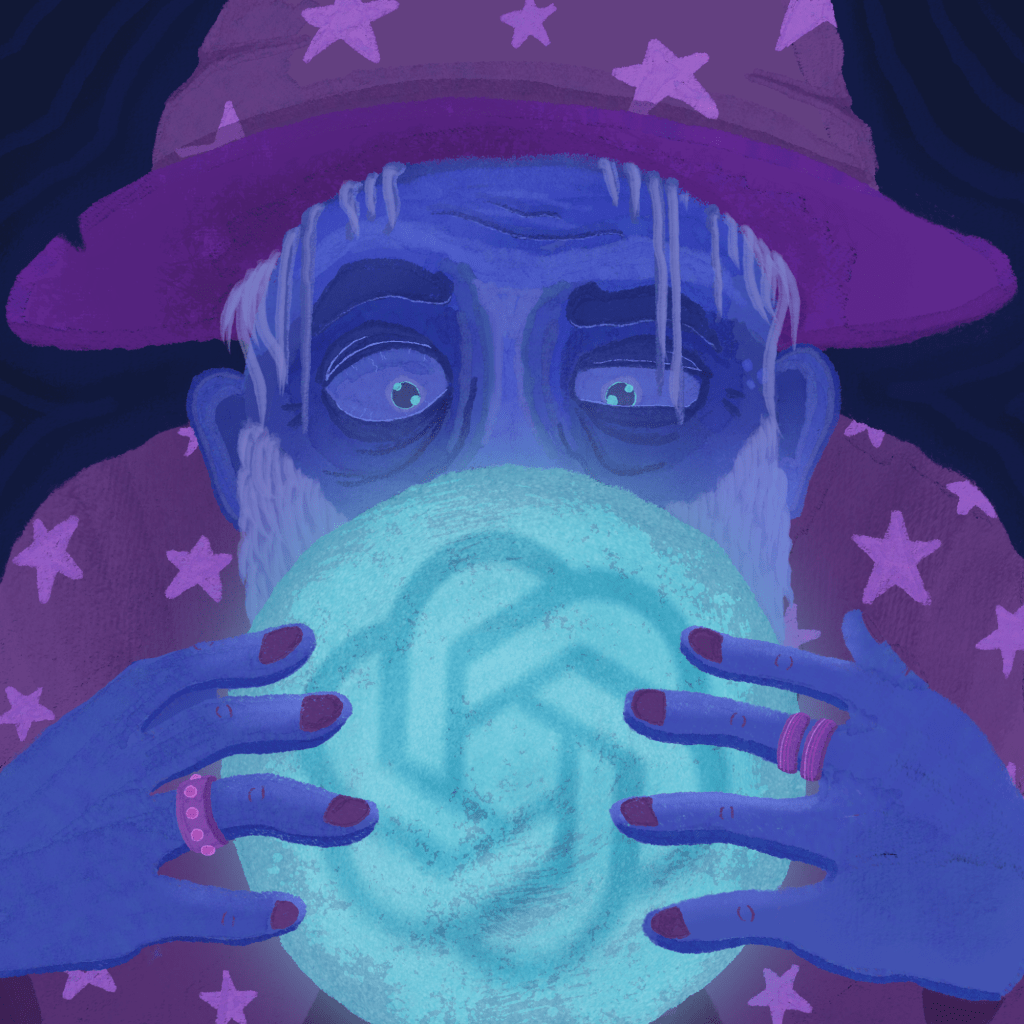
There’s nothing that pushes a lost, lonely soul deeper into their spiral quite like the promise of secretive knowledge. It is the cornerstone of every conspiracy theorist’s repertoire and the only way in which people like flat earthers manage to fuel their delusions. Being supposedly privy to information that others have been conditioned to cast aside, these people believe themselves to be amongst the few who can push against deceptive mainstream narratives.
For years, writers, videographers, scientists and laymen have tried and tried to use basic reasoning skills or the experimental method to appeal to these people. Unfortunately, it seems that this approach often has the opposite effect as is intended, arming conspiracy theorists with a feeling of being cut off from the rest of the world and a litter of buzzwords they don’t understand, which they then go on to apply to any and everything: Occam’s razor, various logical fallacies, quantum theory, you name it.
One could even argue that the single most unproductive thing you could do to wean them off their delusions is engage with these folks, as their approach to any conversation is, at best, masturbatory, or at worst, disingenuous. Their ramblings serve no purpose aside from underlining their perceived superiority over others and rediscovering a childish sense of wonder and fascination. In other words, they don’t have to keep validating and reassuring themselves as long as other people continue to dismiss them as ignorant, gullible, or even downright crazy, because they thrive under the perception that they’re right, and everyone else is wrong.
Besides, as is often said but difficult to pin down the origin of,
“You cannot reason a person out of a position he did not reason himself into.”
Conspiracy theories, magical thinking, these things contradict basic knowledge that we collect during our lifetimes and are often completely irrational. But they are all cut from the same cloth: they disguise blatant lies as potential truths and take advantage of the hesitancy with which rational thinkers are willing to dismiss falsehoods. They feed on the gullible, the desperate, those starved for attention, meaning, or purpose, and become inseparable from their victim’s personalities.
Which brings us to artificial intelligence. Generative AI models like ChatGPT or Gemini are excellent at presenting total fabrications as reliably sourced facts. A gimmick that, combined with users that have increasing difficulties when it comes to critical thinking, results in countless individuals falling into so-called AI psychosis, where they become further and further detached from reality the more they use these services, especially if they are already in a vulnerable state.
In these cases, the promise of secretive knowledge goes beyond LARPing as highly intelligent and quirky. The strange way in which LLMs mimic human interaction (however imperfectly) makes them uniquely equipped to dive deep into someone’s personality, tinker with the inner workings of their mind and encourage the exploration of wild, fantastical ideas that seem to resonate with the user incredibly well.
This puts these people at significant risk, as they no longer need to rely on external or internal validation to keep up their delusional ideas. Instead, they can turn to the big fancy dream-machine that is ever-so-willing to do it for them, allowing them to descend into dark and destructive corners of their mind without anyone around them being aware of it.
After all, nobody can read our thoughts. Some people are better at reading people’s emotions than others, but unless we communicate what goes on in our brains to other people, there is really no way to tell if we’ve lost touch with reality. It is only by comparing our collective experience, be that through reviewing the works of late writers and artists or through personal conversations with other people, that we can determine how harmoniously (or dissonantly) our own frame of mind fits into the world we live in.
In fact, it is often said that humans simply cannot live without social interaction. We’re social creatures, just like dolphins or elephants. It is in our very nature to communicate, to collaborate, and to rely on each other for support. But no matter what you might have been told, generative AI isn’t even close to being able to fill this role.
There can be no healthy and productive exchange between a chatbot and its user, any more than there can be true love between a servant and his master. The very dynamic in which one party seeks only to cater to and indulge the other, rather than criticise their faults or sway them from repeating their mistakes, presents a sycophantic relationship that often leads to an inflated ego and stunts personal development.
Many habitual users of services like ChatGPT fundamentally misunderstand its limitations, to the point where they even convince themselves that they have ‘cracked’ or ‘jailbroken’ these models to be able to access information hidden from the average user, when in reality, they are simply interacting with the AI as intended, and the chatbot is just playing along.
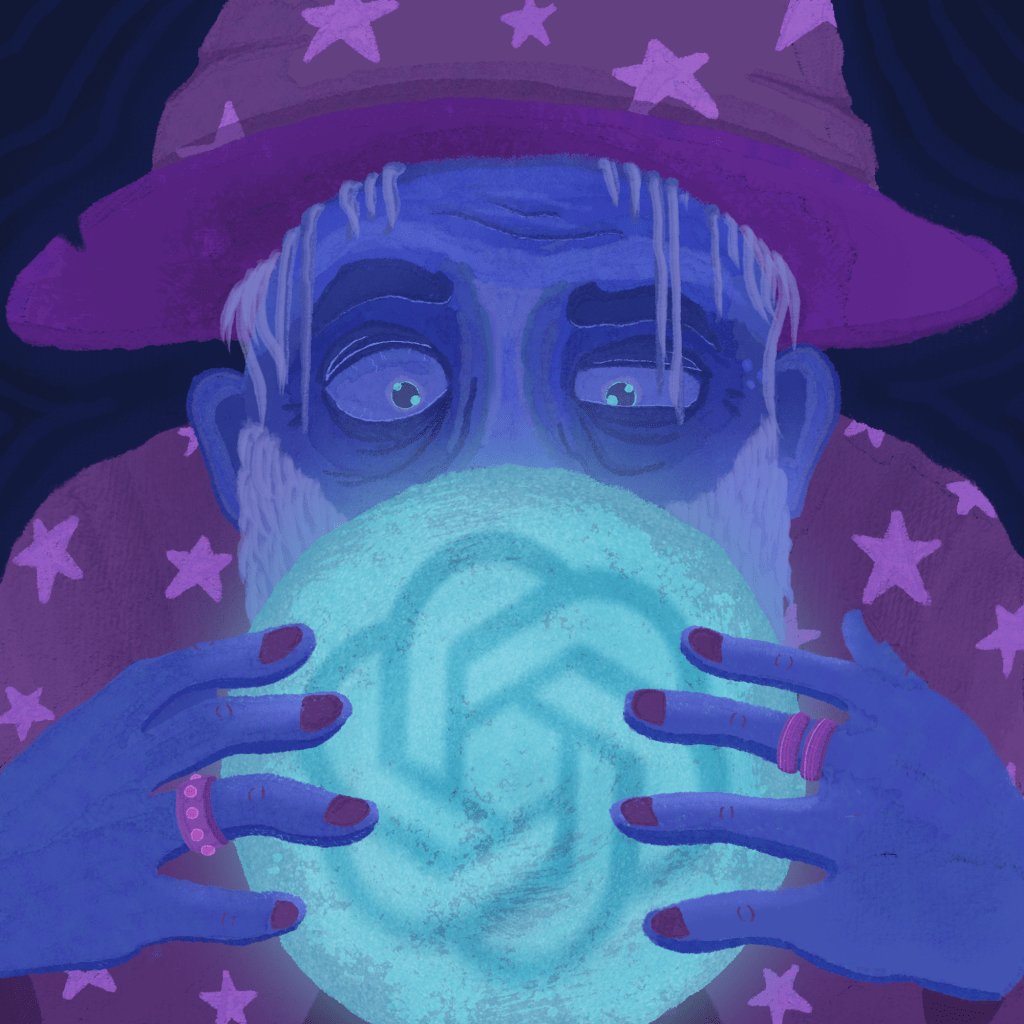
They’re just staring into a magic eight ball, giving it a good shake, and letting it lead their life.
I pity them.



 Truth Decay
Leave a comment